Dogs and cats who got the full portrait treatment
Updated 25 October 2026
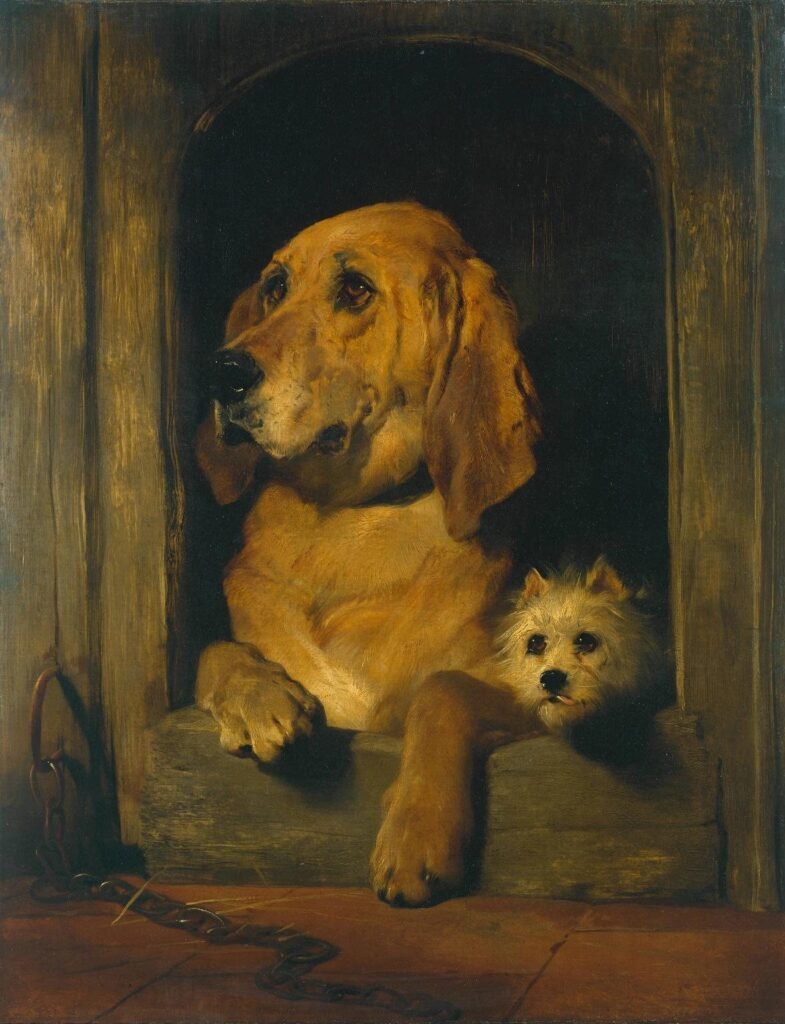
Some pets get a nice photo on the fridge. These ones got oil paint, a gilt frame and, in one case, a wig. Here are eight real animals from British art history, most with names we still know, and the slightly odd stories behind their portraits.
The Earl of Southampton's cat (1603)
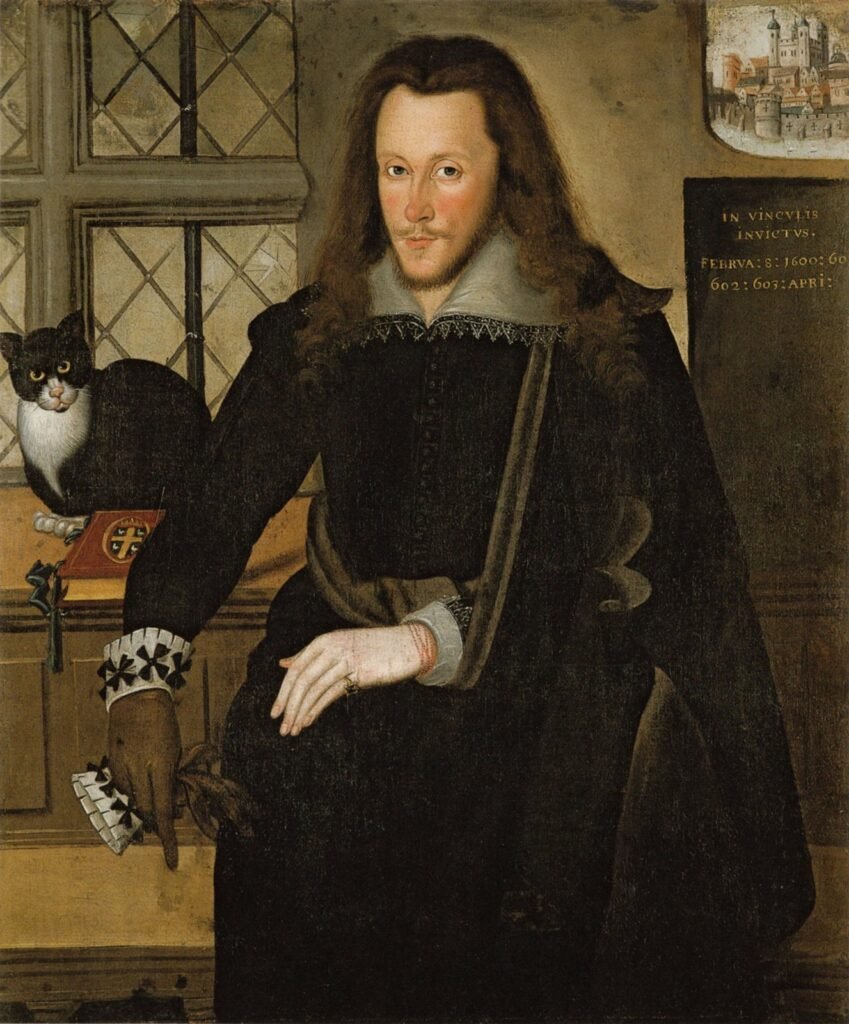
Henry Wriothesley, Earl of Southampton, was Shakespeare's patron and spent time locked in the Tower of London after the Earl of Essex's failed rebellion. His portrait, attributed to John de Critz, shows a black and white cat on the windowsill, a tiny view of the Tower and the Latin motto 'In vinculis invictus', unconquered in chains. Legend says the cat found its way across London to its master, though others think his wife brought it in to keep him company.
Trump, Hogarth's pug, in a borrowed wig (1742-44)
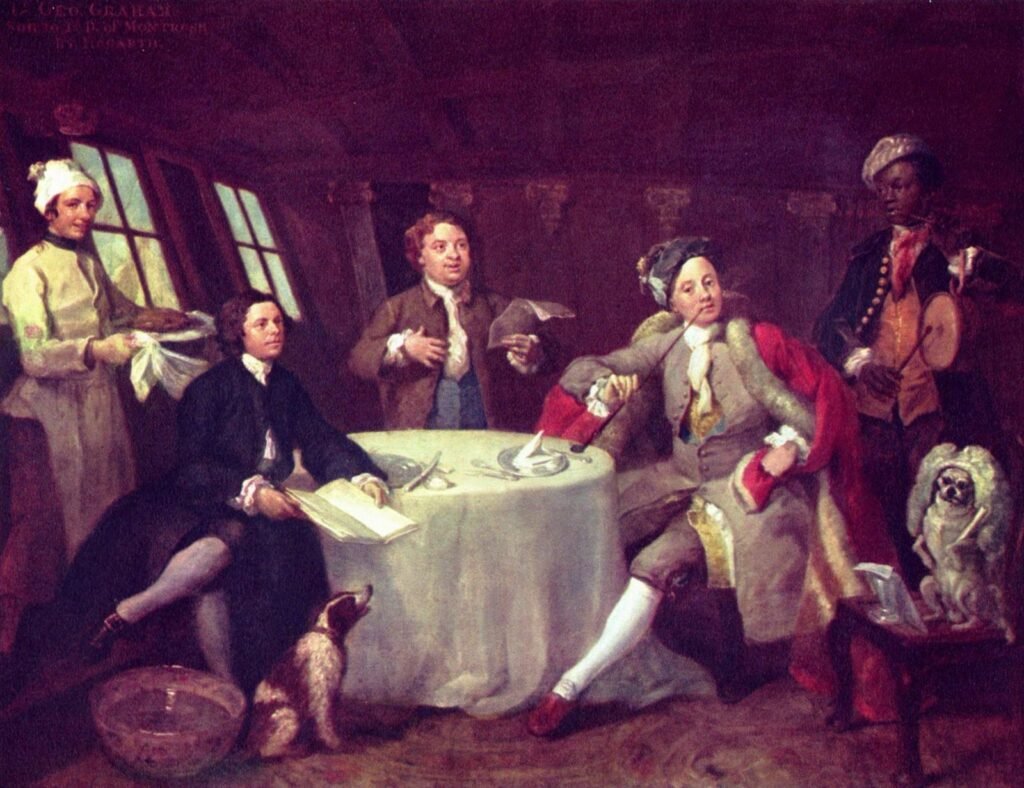
William Hogarth's pug Trump was so much a part of his master's identity that he turns up all over his work. In this group portrait of Captain Lord George Graham in his cabin, Trump sits bolt upright on a chair wearing the captain's wig, while Graham's own spaniel appears to join in the singing. Trump was also modelled in terracotta by the sculptor Roubiliac and later copied in Chelsea porcelain, which is more merchandise than most of us will ever get.
Tristram and Fox, Gainsborough's own dogs (c.1775-85)
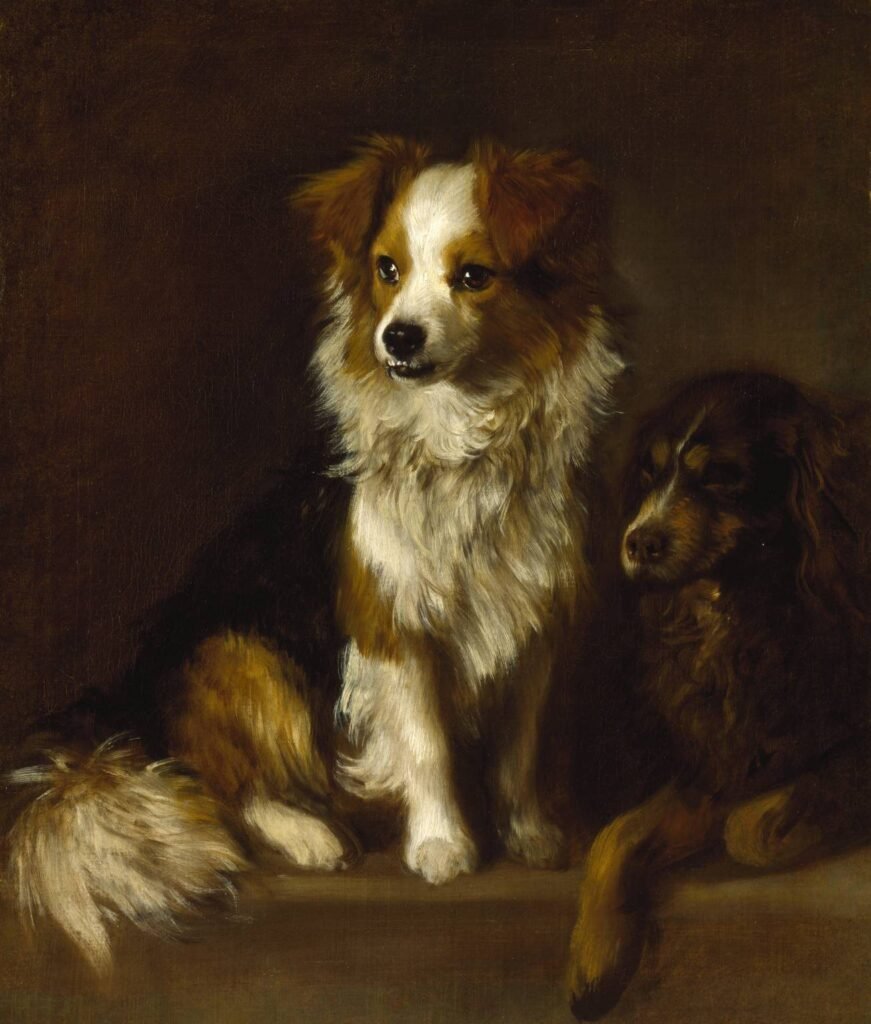
Thomas Gainsborough painted plenty of other people's dogs, but this pair belonged to his own household, and the picture famously hung above his fireplace. The story goes that when Gainsborough was in trouble at home, he would send a grovelling letter written in the name of his dog Fox, addressed to his wife's spaniel Tristram.
Fino and Tiny, a prince's odd couple (1791)
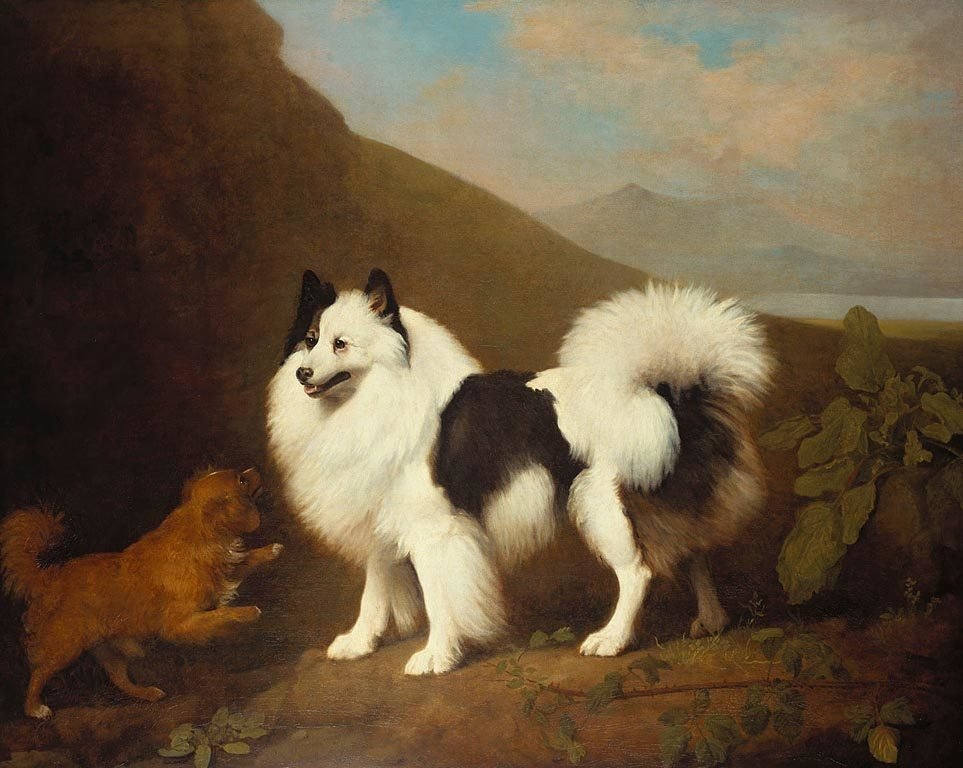
George Stubbs painted these two for the Prince of Wales, the future George IV: Fino, a large black and white Spitz, and Tiny, a very small brown spaniel up on its hind legs. Fino clearly made an impression, because he turns up again in 1793 in Stubbs's painting of the Prince's fashionable racing carriage, The Prince of Wales's Phaeton.
Paul Pry, the stand-in hero (exhibited 1838)
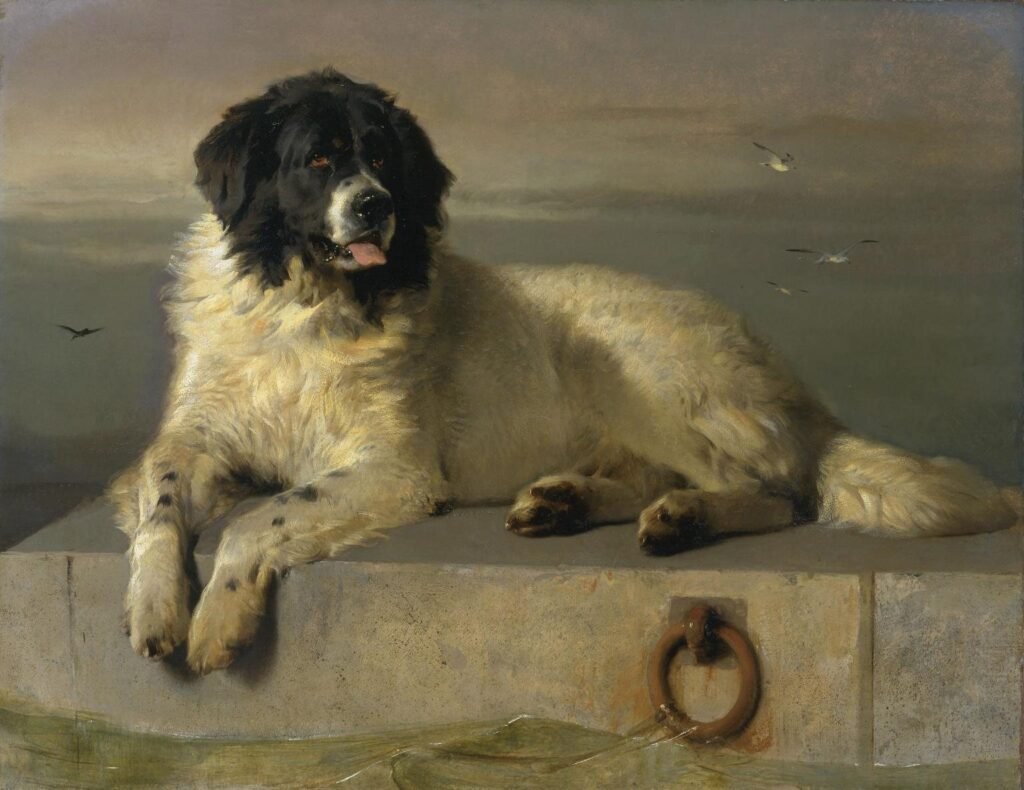
Landseer's A Distinguished Member of the Humane Society was meant to honour Bob, a Newfoundland on the Thames who was said to have saved 23 people from drowning. The dog who appears in it is Paul Pry, and his owner, Newman Smith, was reportedly a little disappointed that his dog went down in history in character rather than as 'the property of Newman Smith, Esq.' The painting was bequeathed by Smith in 1887 and is now at Tate, and the black and white colouring of dogs like Paul Pry is still called a Landseer.
Grafton and Scratch, Dignity and Impudence (1839)
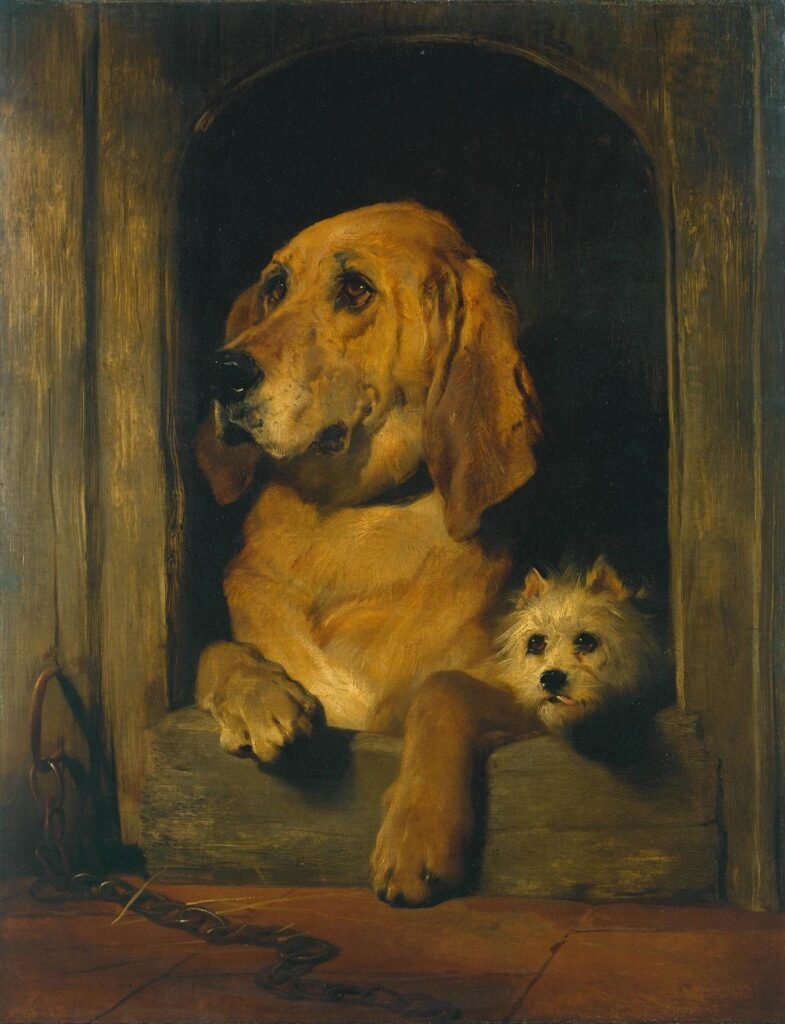
The chemist and politician Jacob Bell commissioned Landseer to paint his two dogs: Grafton, a solemn bloodhound, and Scratch, a small West Highland terrier peeping out of the same kennel. The title does the rest. Bell gave the painting to the National Gallery in 1859, and it is now part of Tate's collection.
Islay and Tilco, the Queen's terrier and spaniel (1839)
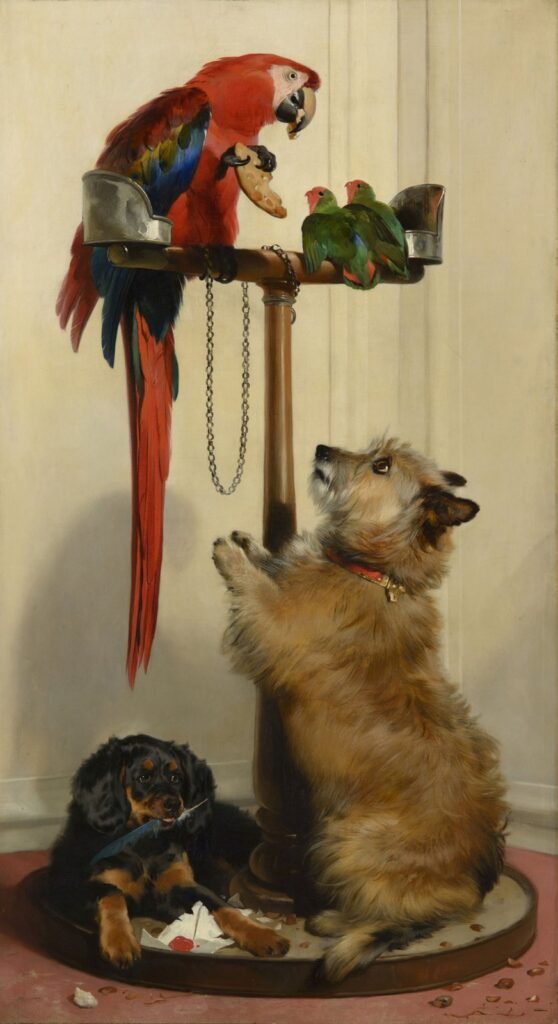
Queen Victoria commissioned this tall picture of Islay, her Skye terrier, and Tilco, a Sussex spaniel given to her by the Earl of Albemarle in 1838, sharing the scene with a macaw and two lovebirds. When the Prime Minister, Lord Melbourne, saw it, he exclaimed at how like the dogs it was. It went on show at the Royal Academy in 1840.
Sources: 1
Foss, Edward Lear's cat (died 1887)
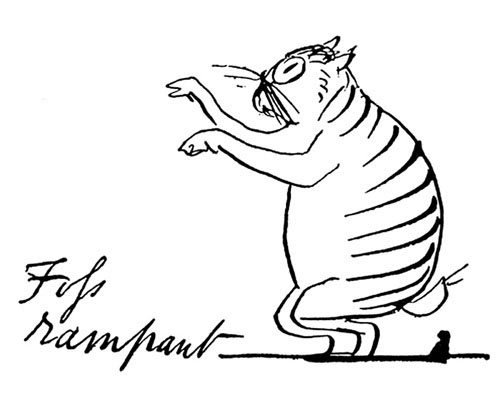
Edward Lear, the man behind The Owl and the Pussy-cat, adored his stumpy-tailed tabby Foss and drew him in a series of mock heraldic poses, from couchant and rampant to the less official dansant. Many accounts say that when Lear moved house in Sanremo, he had the new villa built to the same plan as the old one so Foss would not be confused. Foss died in November 1887, two months before Lear, and was buried under a headstone giving his age as 31, a number Lear believed rather more firmly than anyone else.
Sources: 1
Every one of these animals was somebody's favourite, which is really what a portrait is for. If your own dog or cat deserves the same treatment, Made For Yours can paint them from a phone photo in that old country-house style, wig optional.