Why the Georgians and Victorians had their dogs painted
Long before phone cameras, if you wanted to remember your dog you had to pay a painter and hope the dog sat still. For the Georgians that mostly meant hounds and hunting. By the time Queen Victoria was on the throne, it meant spaniels lounging on upholstered stools and royal pets hanging at the Royal Academy.
Hogarth puts his pug in the picture
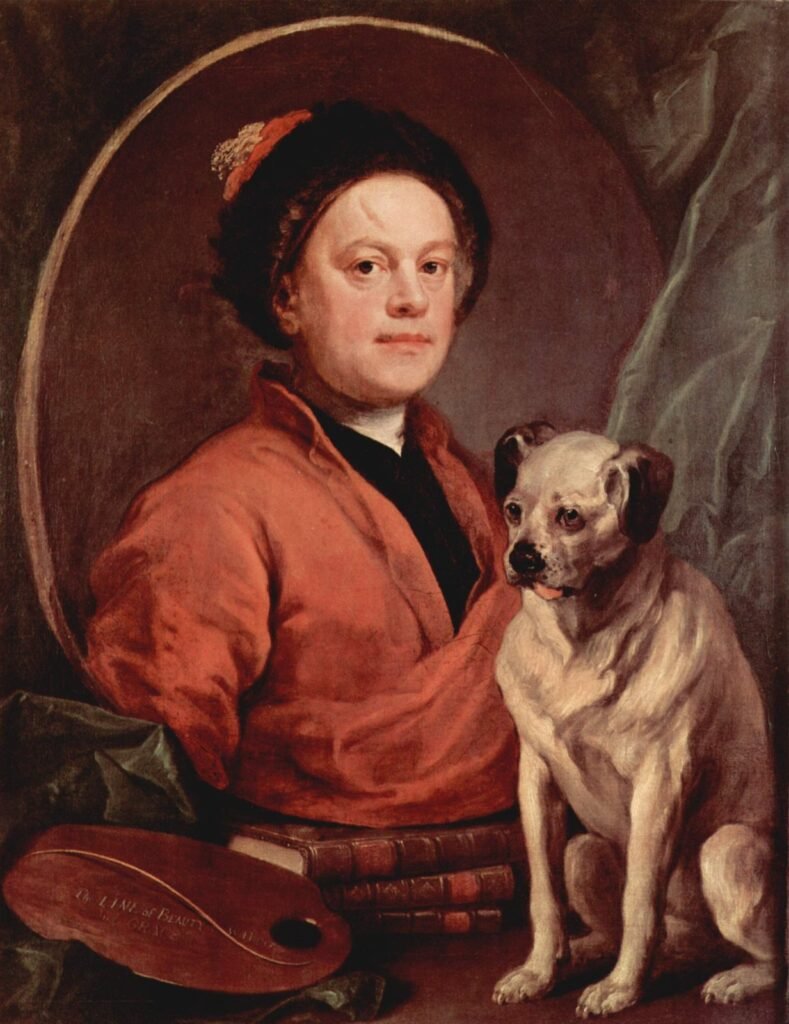
In 1745 William Hogarth painted himself as a portrait propped on books by Shakespeare, Swift and Milton, with his real pug, Trump, sitting in front of it. He had started the picture years earlier in a formal coat and wig, and Trump was not in the first version at all. Tate calls the dog an emblem of the artist's own pugnacious character, and his rivals clearly agreed, because in 1753 Paul Sandby caricatured Hogarth as a pug.
First the hounds, then the dogs themselves
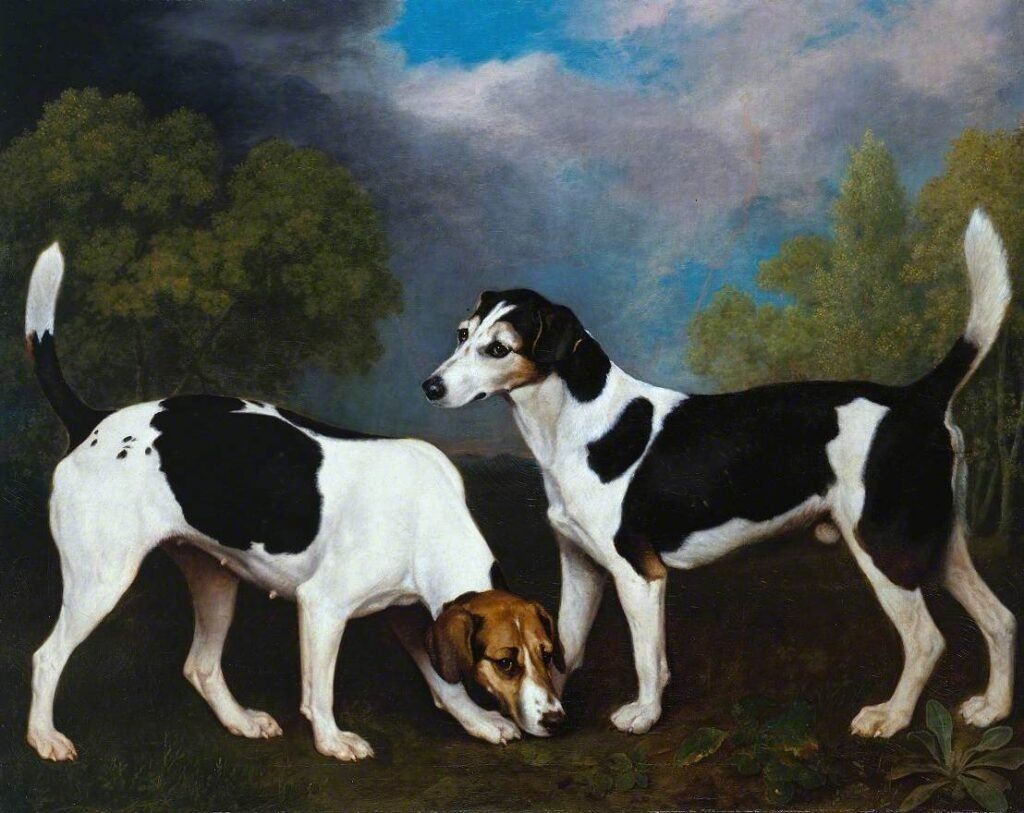
For the Georgian gentry, the dogs that mattered most were working dogs. George Stubbs, best known for his horses, took on more and more commissions in the 1770s to paint hunts with their packs of hounds, and it was in that decade that he first painted single dogs on their own. A Couple of Foxhounds, from 1792, is exactly what it says: two hounds with a whole canvas to themselves.
The dog Stubbs never met

The naturalist Joseph Banks came home from Captain Cook's first voyage and asked Stubbs to paint a dingo, which he finished in 1772. With no live animal to look at, Stubbs worked from Banks's own descriptions, the only time he painted an animal he could not observe from life. Portrait of a Large Dog is one of the first Western paintings of an Australian animal and now belongs to the National Maritime Museum in Greenwich.
Gainsborough's Pomeranian, paid for in music lessons
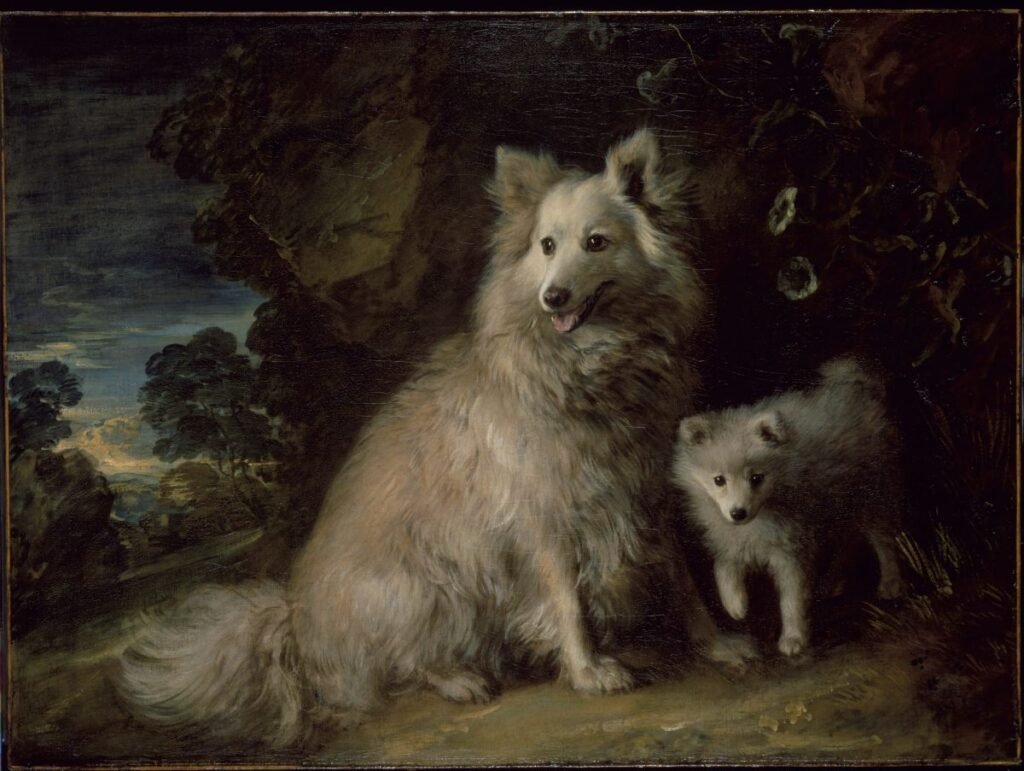
Pomeranians were still rare in England when Thomas Gainsborough painted this mother and puppy around 1777. She is thought to be the same sleeping dog who appears in his portrait of the composer Carl Friedrich Abel, and Gainsborough is said to have given Abel the painting in exchange for viola da gamba lessons. Pet portraits were not especially fashionable or well paid at the time, which makes this one all the more charming.
Dash, a lonely princess's best friend

Dash, a King Charles spaniel, arrived in January 1833 as a gift to Princess Victoria's mother, and by that spring he had become the teenage princess's companion. On 23 May 1836, the day before Victoria turned 17, her mother gave her this little portrait of him by Edwin Landseer. Victoria called him 'dear little Dashy', and on her coronation day in 1838 she ran up to her rooms at Buckingham Palace to give him his usual bath.
Three dogs and a parrot

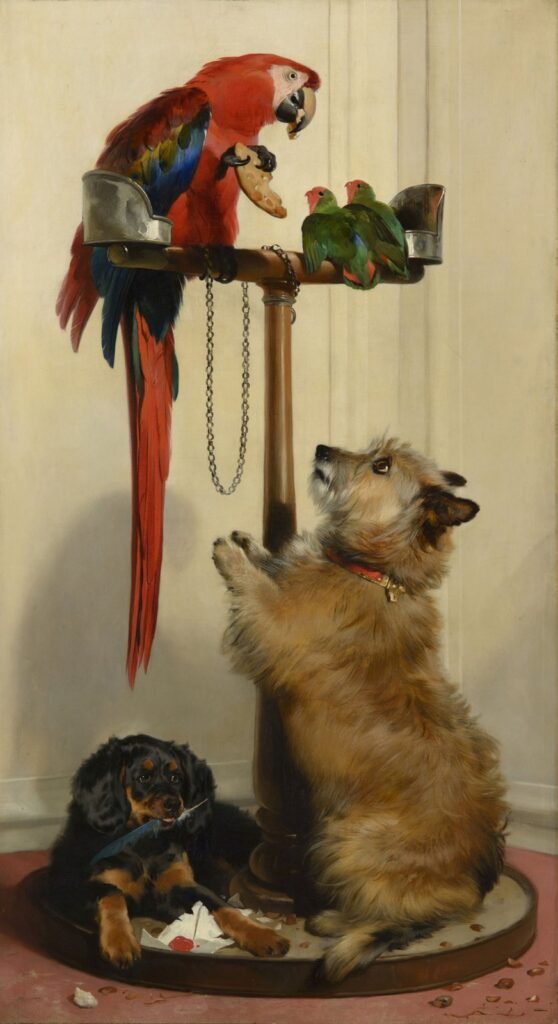
Once Victoria was queen, the commissions got bigger. In 1838 Landseer painted Hector the deerhound, Nero the greyhound and Dash on a stool, with Lory the parrot cracking nuts in front of them, and Victoria called the finished picture 'the most beautiful thing imaginable'. Hector had joined the household as a puppy in 1835 and grew enormous, and Victoria noted that he made Dash rather jealous.
Sources: 1
Islay, the terrier who begged
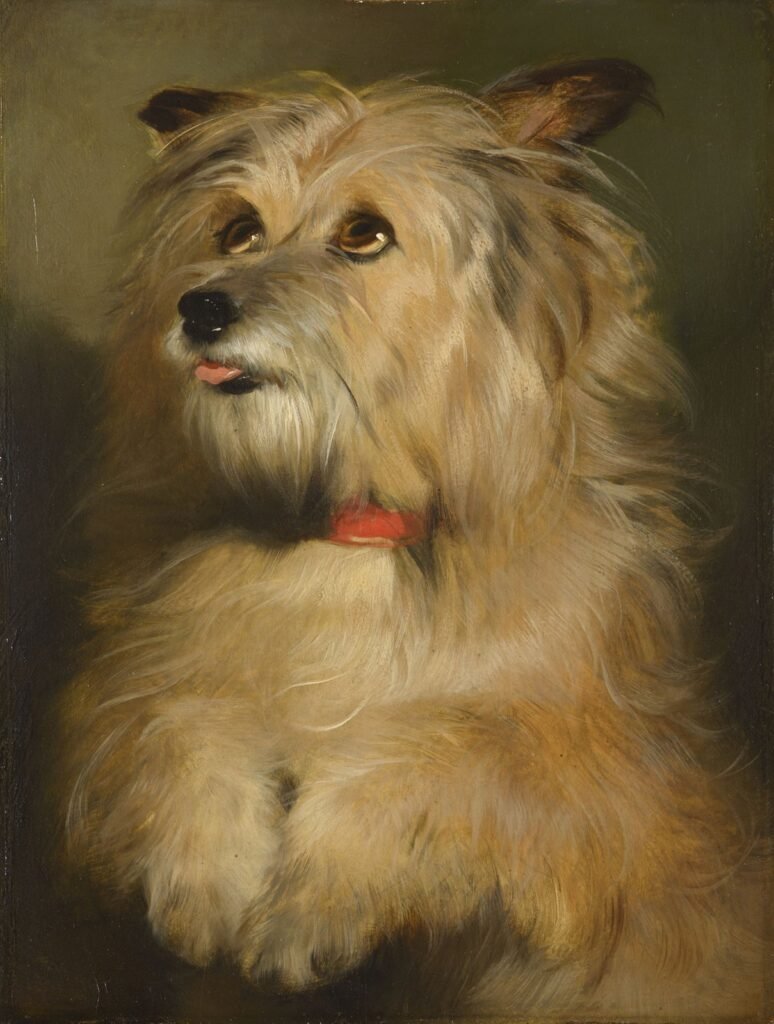
Islay, a Skye terrier, joined Victoria in 1839, and within a month Landseer had made a chalk sketch of him sitting up to beg. This oil portrait followed in 1840. Victoria called him her 'faithful little companion' and 'a great darling', and he lived until 1844, having survived a bite from a cat along the way.
Sources: 1
A Christmas present and a missing top hat
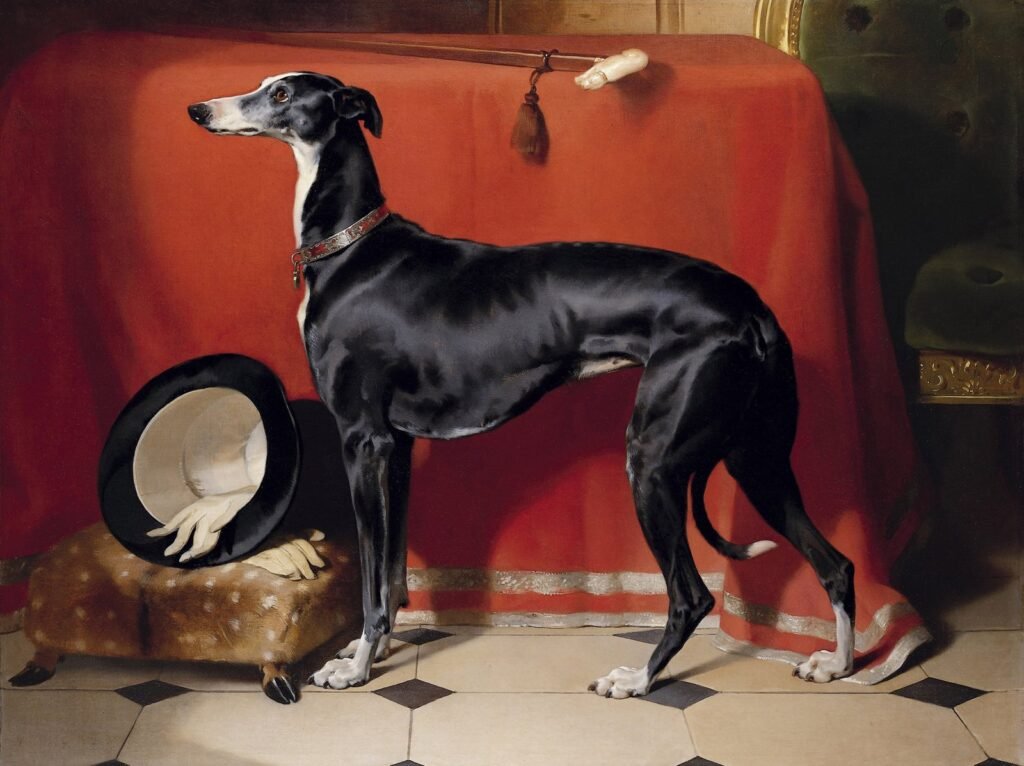
Prince Albert brought his greyhound Eos with him to England when he married Victoria in 1840, and once described her as very friendly if there was plum cake in the room. For Christmas 1841 Victoria secretly had Landseer paint Eos guarding Albert's top hat, gloves and cane. Landseer is said to have borrowed the real hat and gloves without asking, which caused some panic among the Prince's servants when he wanted to go out, but the surprise worked and Albert was, in Victoria's words, 'quite delighted'.
So why pay to paint a dog?
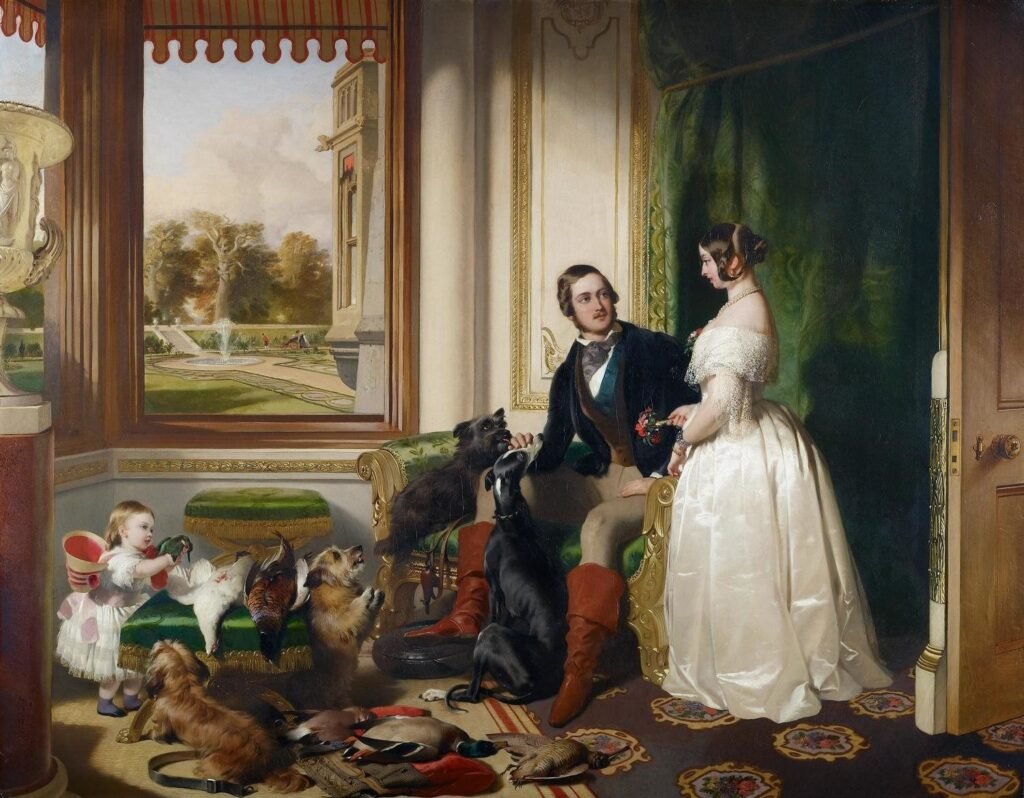
Sport was part of it: hounds and gundogs were valuable working animals, and George IV later moved his Stubbs paintings, Fino and Tiny among them, to the Royal Lodge in Windsor Great Park, presumably as a fitting home for sporting pictures. Status was another reason, since greyhounds had long been linked with court life, and Landseer's Eos quietly nods to royal portraits by Titian and Van Dyck. Then there was plain affection, which is how you get Windsor Castle in Modern Times, with Albert back from shooting while Eos, Islay, Cairnach and Dandy Dinmont fuss around him.
Landseer, the nation's dog painter
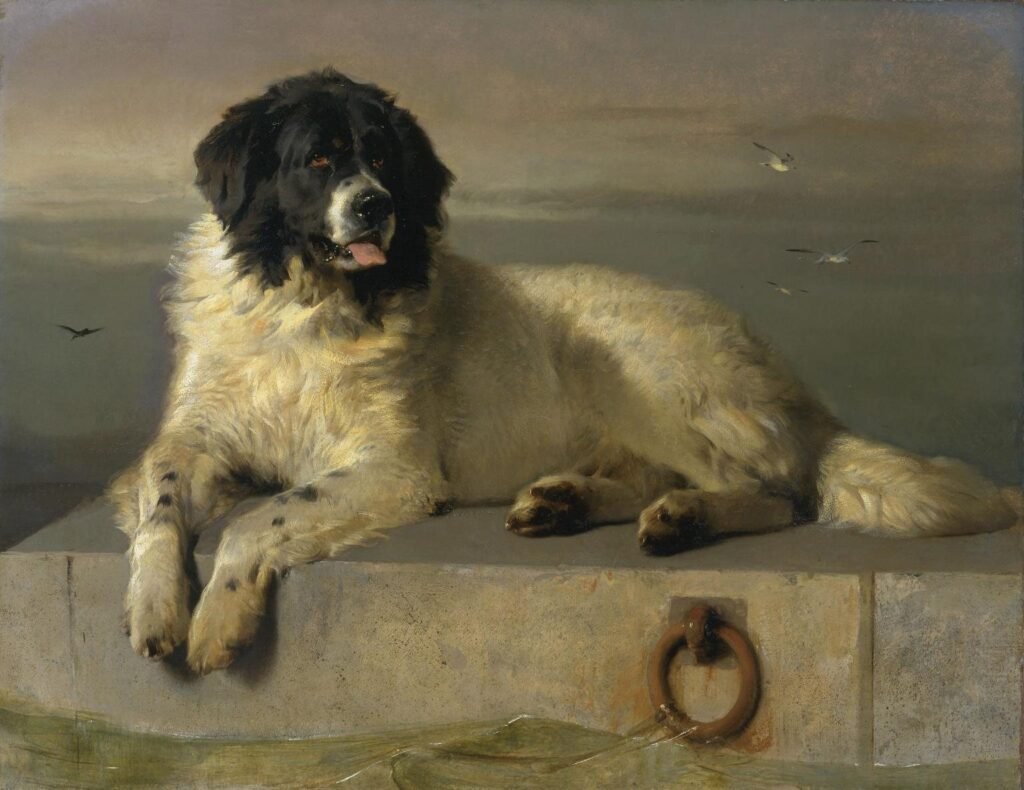
Landseer went on to make more than forty works for Victoria and Albert, was knighted in 1850, and made the lions at the foot of Nelson's Column. Prints of his paintings hung in ordinary middle-class homes, and the black and white Newfoundland he loved to paint is still called a Landseer. He was even rumoured to be able to paint with both hands at the same time.
The spaniel with a marble memorial
Dash died in December 1840 and was buried at Adelaide Cottage in Windsor Home Park under a marble effigy. His epitaph says his attachment was without selfishness, his playfulness without malice and his fidelity without deceit. It ends by telling the reader to profit by the example of Dash, which is still decent advice.
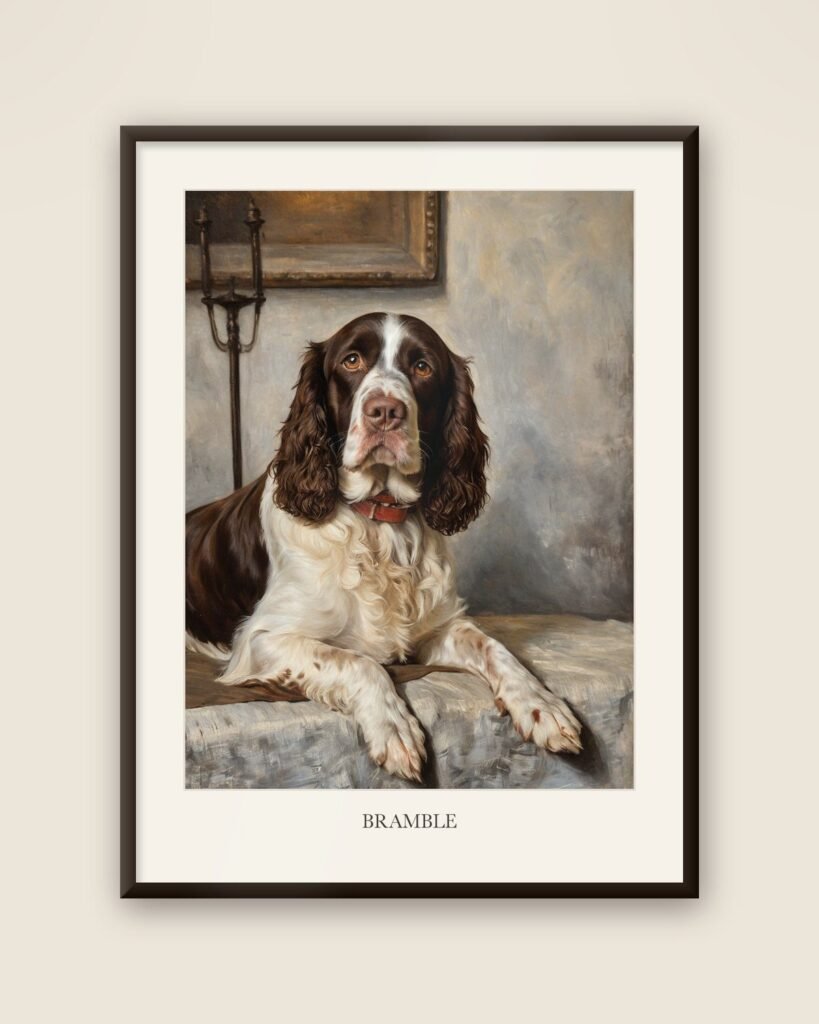
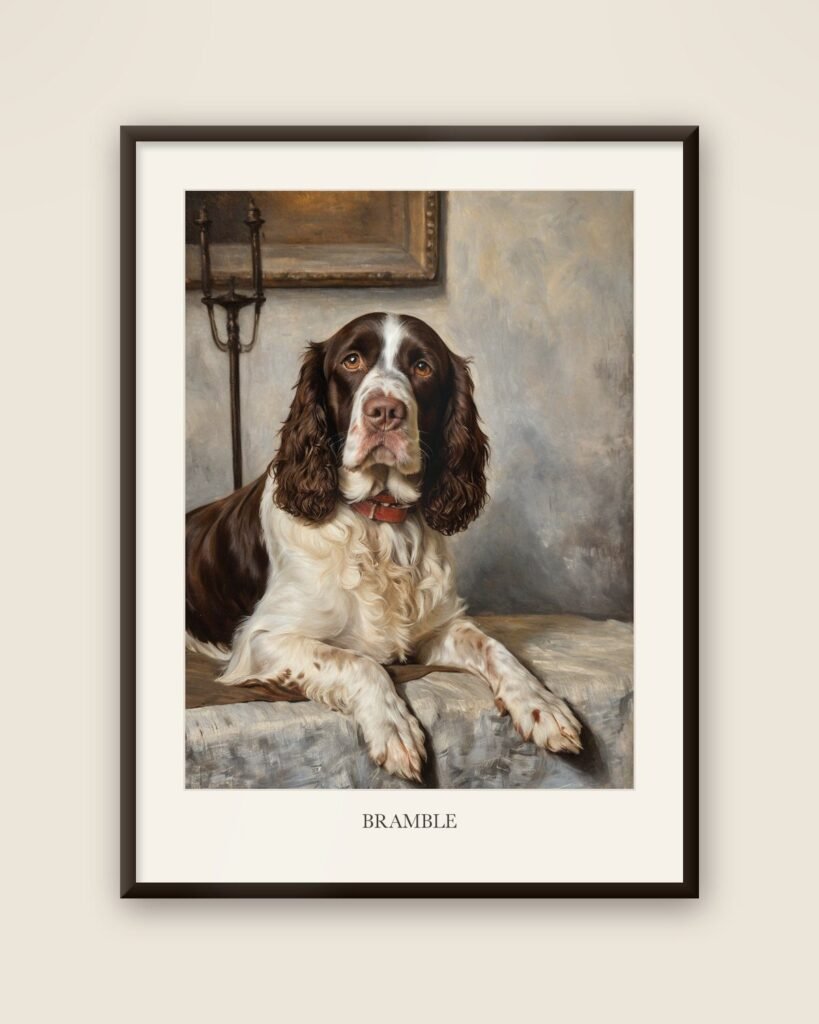
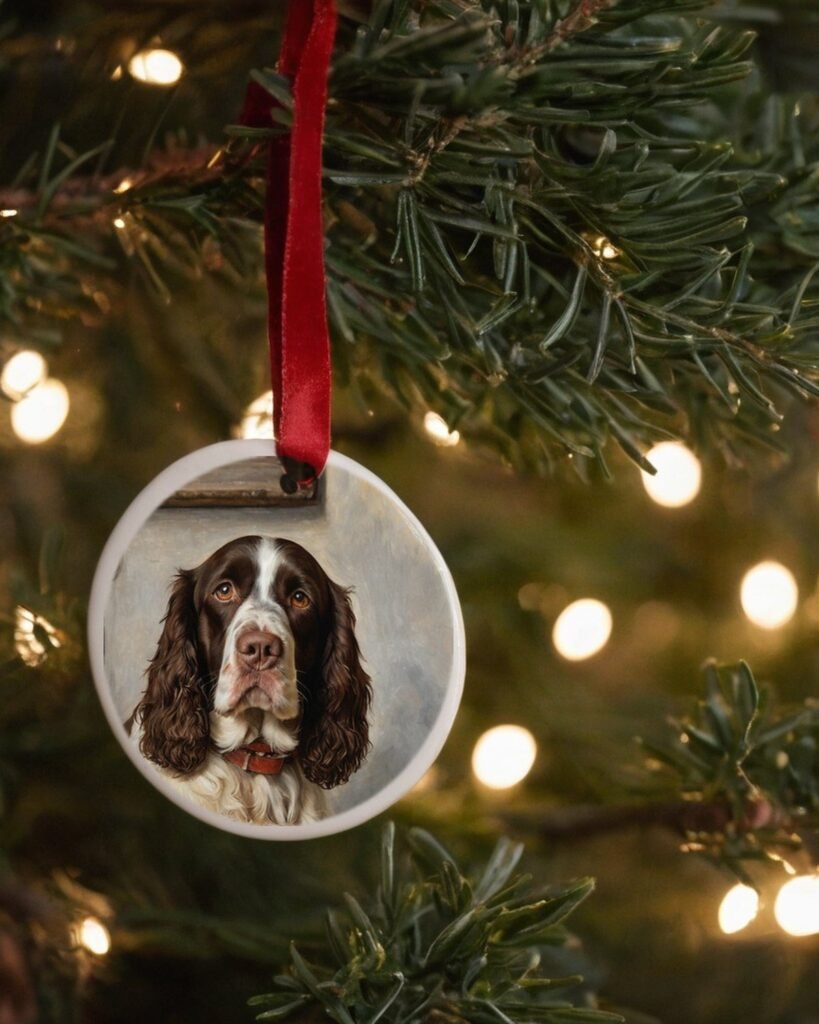
These days you do not need a royal budget or a dog willing to sit for Landseer. Made For Yours can paint your own dog or cat from a phone photo in that same old country-house style, with no top hats borrowed in the process.